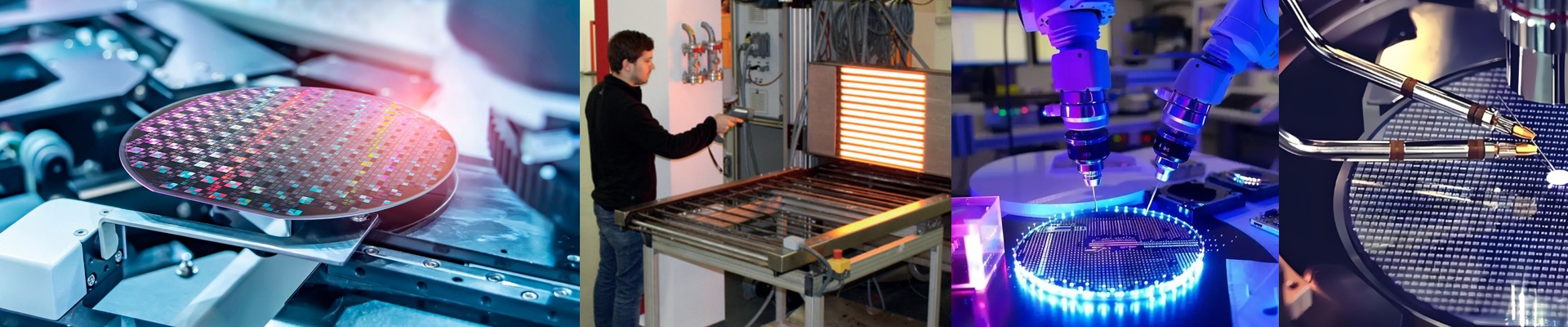

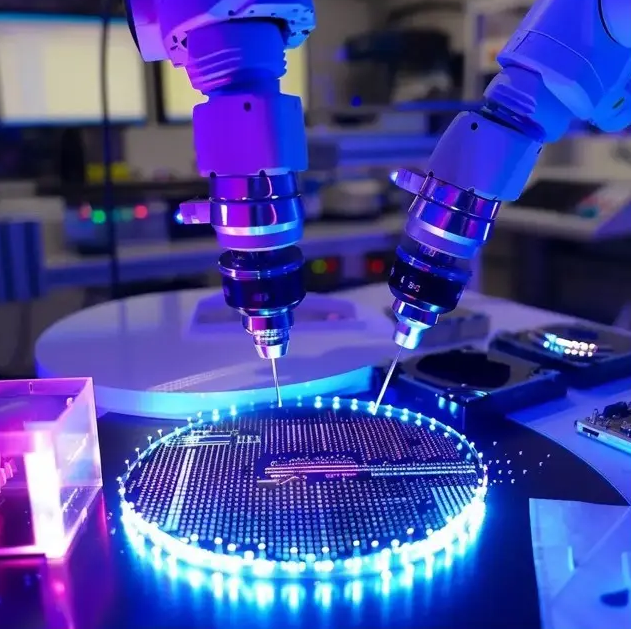
On the fab floor, you know how it goes: a 0.5°C drift in the photoresist bake and your critical dimensions are off—next thing you know, you’re scrapping a lot. We built this photovoltaic silicon wafer heater to hold thermal behavior inside the lithography window, shift after shift. What matters under the hood It runs on short-wave infrared elements, so it responds fast and directly. Across the active area, wafer-level uniformity hits ±0.1°C, and setpoints repeat within 0.2°C. That means your soft bake and hard bake profiles land the same way, run after run. The heater body is quartz and high-purity ceramic—no particle excursions—and it sits comfortably in cleanroom Class 1–100. Power density is tuned for 156–210 mm wafers, with ramp control that respects the wafer’s thermal budget. Why it sticks in PV wafer processing Photovoltaic wafer lines need bake temperatures that stay put. You have to control photoresist flow, adhesion, and etch selectivity—without overshoot that warps wafers. This unit holds that line, which cuts down rework, keeps scrap low, and speeds up changeover. Energy use takes a hit too. It heats quickly and holds steady, so you’re not burning time on long stabilization pulls like you do with older hotplates. And it’s engineered as a validated, equivalent substitute aligned to international semiconductor equipment standards, so it drops in without re-qualifying the whole line. The practical details It fits most standard lithography bake modules, but you’ll want to confirm footprint and mounting hardware against your specific platform. After a cold start, give it a brief thermal soak before you’re back in the process window. Line up utilities to the rated voltage and cooling path. If airflow doesn’t match, uniformity can drift by a few tenths of a degree. Once you’re aligned, the process stays locked in, and the tool keeps running 24/7 with predictable maintenance intervals.