
Why ODM-Grade Infrared Heaters Are the Key to Higher Profit Margins in Packaging and Testing
We built our ODM-grade infrared heating elements for one specific job: the lithography soft bake stage. The idea is straightforward—give your packaging and testing lines a heat source that’s dependable, doesn’t bleed your budget, and keeps things running without surprise stops. This isn’t just another generic lamp. It’s a tool, tuned for semiconductor wafer work.
Power, Voltage, and Size—Without the Overthink
In a soft bake oven, you need heat that arrives fast and stays steady. No spikes, no drift. Our infrared heaters deliver that predictable punch in a compact footprint. We chose 400V input because that’s what high-line environments need. Over long cable runs, voltage drop can steal performance. Higher voltage means lower current for the same wattage, which cuts copper losses and keeps terminals cooler. And the length? We match it to standard oven chambers—around 300mm—so it drops right in. No re-racking. No cavity re-engineering. The wattage is tuned to hit the required surface temperature cleanly, so you get quick ramp-up and a rock-solid setpoint during the photoresist soft bake.
The Materials That Make It Feel Like It Belongs on the Floor
Inside is a quartz tube with a halogen filament, built for rapid infrared emission and tough enough for thermal shock. The internal halogen cycle keeps the filament stable, so output stays repeatable over long stretches of service. A reflective coating on the outside pushes more energy forward, so more heat lands where you need it—on the wafer—instead of warming the oven walls. The R7s connector? Practical, industrial, and just works. It lines up cleanly, handles the current without fuss, and installs fast. Wire it once, and it stays put, even with the oven opening and closing again and again.
Soft Bake, Real-World Conditions, and What It Actually Feels Like
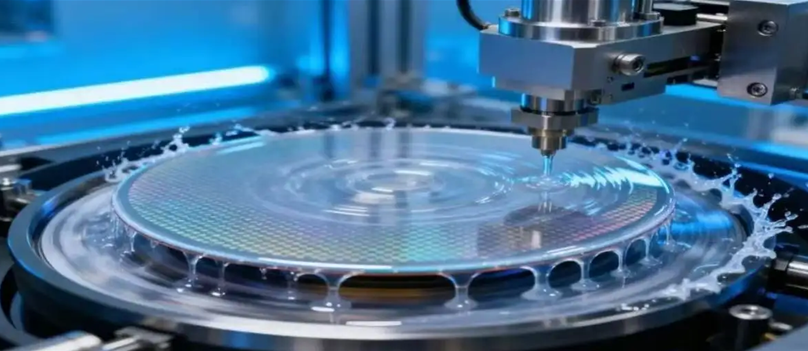
In lithography, the soft bake step clears solvents from the photoresist and sets the film for exposure. If the heat is uneven, you get thickness issues and yield loss. Our infrared element gives you heat that’s directional and controllable, helping the whole batch hit a uniform temperature. This design lives on the production floor. It handles frequent thermal cycling and holds output consistency. But here’s the honest part: high power density means your oven’s cooling and airflow need to be up to the task. If the chamber can’t shed heat, the controller will struggle to find stability. Match the heater to the machine, and you get repeatable soft bake—fewer rejects, and less energy per wafer. That’s how ODM-grade infrared heaters quietly pull your annual profit margins in the right direction in packaging and testing.