
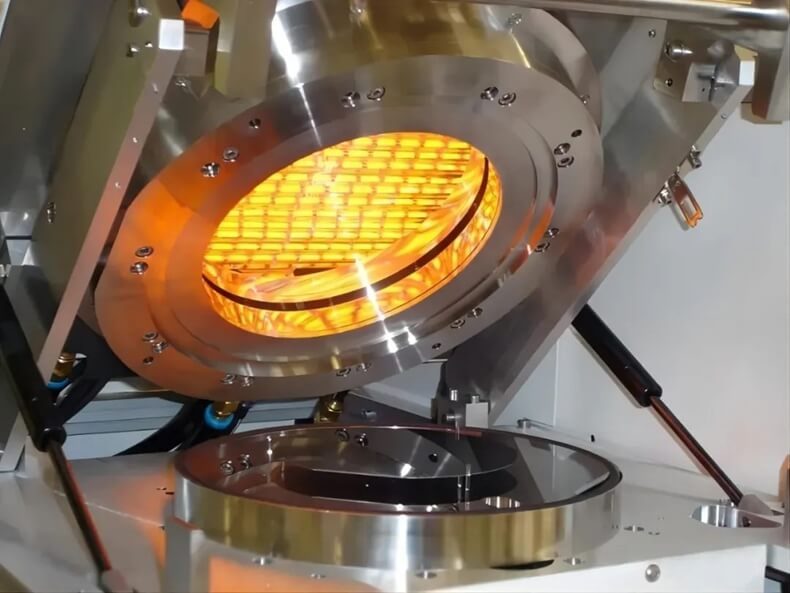
Stop Your IR Lamps from Trashing Your Fab
Let’s be honest: a burst infrared lamp in a high-load fab is a total nightmare. It isn’t just about the heater stopping. When one of those quartz tubes goes, it basically becomes a glass grenade, spraying shards and chemical junk all over your production line. For anyone running wafers, that’s an instant disaster. You’re looking at secondary contamination and a whole batch of scrapped silicon. Why these things pop High-wattage lamps under constant pressure are under a ton of thermal stress. Most of the time, the failure happens right where the seal meets the metal, or because of a few nasty hot spots. Once that quartz cracks, the halogen gas leaks out, the filament burns up in a heartbeat, and you’ve got a mess on your hands. In a clean room, you can’t just “clean up” after a pop. You have to stop the particles from ever hitting the silicon in the first place. How we handle it We decided to stop playing the lottery. We put a protective sleeve and a reinforced containment shell around the heating element. Think of it as a physical shield. If the inner lamp pops, the glass shards stay trapped inside the sleeve. The outer shell catches everything else, so you don’t end up with “shrapnel” flying across your fab floor. We also switched to high-purity fused quartz. It handles those rapid heat cycles without warping. Plus, we tightened up the tolerances on the end-cap seals. That stops the gas leaks that usually kill these lamps way too early. The real-world trade-off Here is the catch. Adding that sleeve means you lose a tiny bit of infrared transmission. You aren’t getting 100% of the direct heat flux like you would with a bare lamp. You might need to tweak your ramp-up times or bump the power up a notch to hit your target temperature. But honestly? That’s a small price to pay to avoid shutting down the entire fab for a massive decontamination job. A couple of tips for the setup Make sure you wire these into a system with solid voltage regulation. Spikes are killers—they shorten the lamp’s life and make a rupture way more likely. And check your cooling fans. Make sure they’re actually spec’d for the heat load you’re running, otherwise the housing will overheat and you’re right back where you started.