
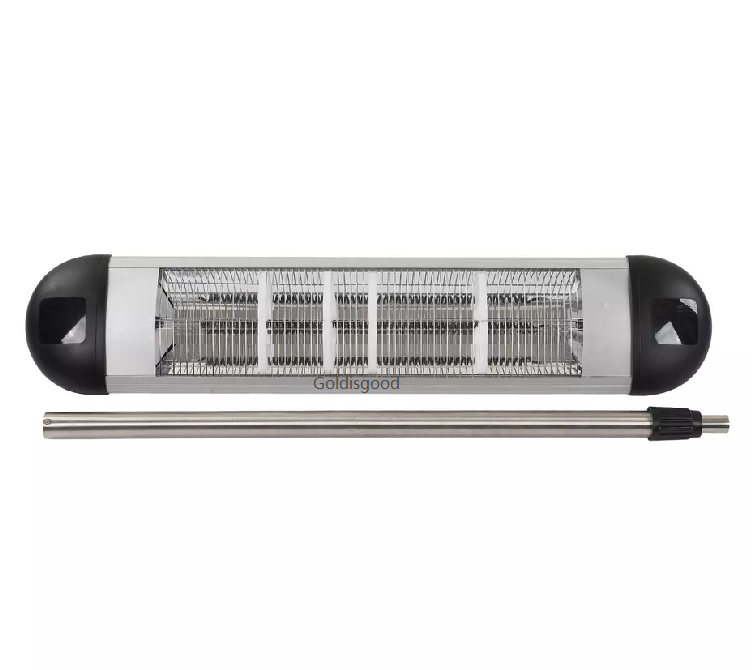
Why You Actually Need Explosion-Proof Quartz in Your Bathroom
Putting an infrared heater in a shower isn’t just about keeping the chill off. You’re basically throwing a piece of high-heat tech into a steam room. Between the humidity, the random water splashes, and the constant jumping from ice-cold to scorching, it’s a rough environment. Standard quartz tubes just can’t hack it. They crack. Simple as that. The “Cold Drop” Problem Quartz handles heat well, but it panics when things cool down too fast. Imagine a tube glowing at 600°C. Now imagine a single, stray drop of cold water hitting it. That tiny drop causes the glass to shrink instantly in one spot. That’s where things go wrong. A normal tube will shatter on the spot. That’s why we use explosion-proof quartz. These have a reinforced layer or a special coating that acts like a safety net. If the internal filament snaps, the tube stays in one piece. You don’t end up with glass shards flying across your bathroom floor. The Nitty-Gritty on Safety We use high-purity silica glass for these. It’s a specific choice so the heat can pass straight through the glass instead of getting trapped inside. But the real secret is in the seals. You can’t just wrap some wire around the ends and call it a day. We use high-temp silicone or ceramic gaskets to make them airtight. If moisture sneaks past the seal and hits the electrodes, you’ve got a short circuit on your hands. Not a great way to start your morning. The Trade-off Now, these tubes aren’t magic. There’s a small catch. The protective coatings can slightly mute the heat intensity compared to a bare tube. It’s not a dealbreaker, but you’ll notice it. To fix this, we usually bump up the wattage. A bit more power ensures you still feel that deep, cozy warmth the moment you step out of the water. One last thing: please, for the love of everything, wire these into a proper GFCI outlet. Even the toughest explosion-proof tube can’t save you if your electrical panel isn’t set up for a wet zone. Safety first.