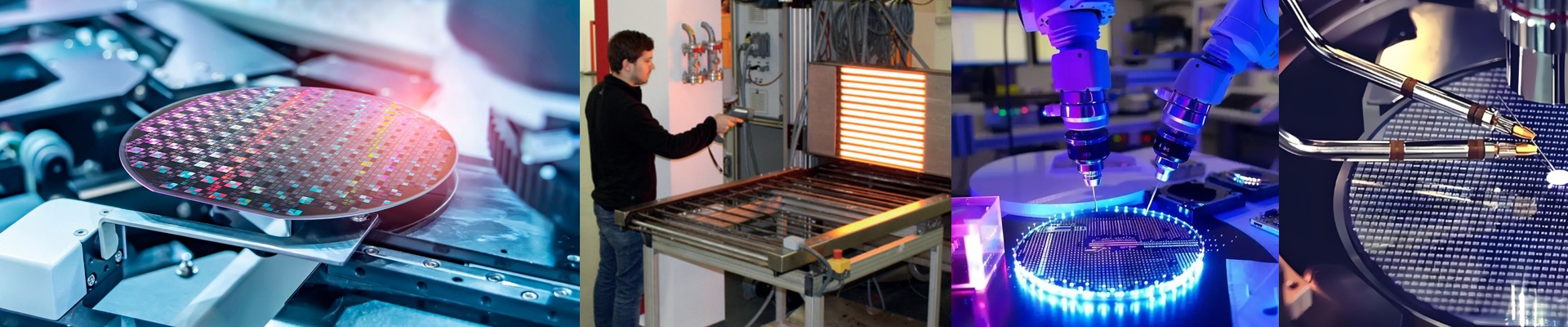

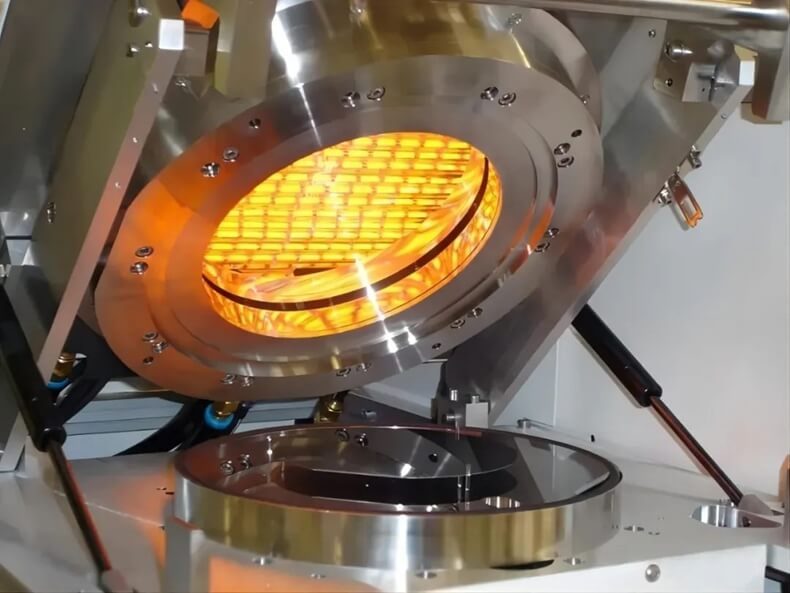
On the lithography floor, a 300 mm wafer doesn’t have time for an oven to catch up. Soft bake drift shows up as line-width movement. Hard bake variance brings scum. And slow drying? That leaves water marks that chew through yield. We built our wafer-level CSP infrared heater for exactly these moments—fast, controlled heat right where the process needs it. What matters, technically We run short-wave infrared with fast response and tight spectral control, so the energy lands in the photoresist and wafer, not in the fixtures. Across the active area, you get wafer-level uniformity within ±0.1°C, and ramp-up plus soak profiles that repeat run after run. It’s engineered for cleanroom Class 1–100: low-outgassing materials, sealed quartz windows, and an airflow path that doesn’t invite particles into the thermal envelope. Zero particle generation is verified with in-situ monitoring during qualification runs. The system runs 24/7 with maintenance windows you can plan around—no surprise downtime. Why it fits the work For wafer drying, the infrared profile pulls off surface water without thermal shock, so cycle time drops and carryover stays low. In photoresist processing, that same control keeps soft bake and hard bake tight, which stabilizes CD and sidewall profile across the lot. On wafer-level CSP, the heater supports stable curing and encapsulation, keeping thermal budget under control and warpage low. You get faster throughput, tighter distribution, and less scrap—without chasing oven setpoints that always lag behind reality. Here’s what to plan for The heater needs a clean, dry power feed and a stable mounting plane to keep alignment and uniformity where they should be. It’s compatible with standard FOUP handling and SEMI interfaces, but integration has to account for emissivity differences across films and substrates—we provide a calibration matrix per recipe. Plan for periodic window inspection and thermal verification. Precision doesn’t happen by accident—it gets maintained.