

Why we’re switching to IR curing for lead-free chips
The semiconductor world is finally ditching lead-based solders and those nasty, solvent-heavy drying methods. It’s about time. But here’s the catch: you need to hit exact temperatures without ruining the wafer or burning through an insane amount of electricity. That’s where infrared (IR) curing comes in. It’s basically the straightest line between where you are and meeting those “green” standards.
The physics (without the textbook)
Think about a standard convection oven. It heats the air, then the air heats the part. It’s slow and wasteful. IR is different. It uses electromagnetic radiation—basically, photons hitting the substrate directly. No massive fans. No giant air-handling units. You aren’t wasting energy heating the entire room just to fix one tiny part. It just makes sense. Plus, lead-free materials are finicky. They usually have higher melting points and a much smaller window of error. With IR, you can ramp up to temperature in seconds. This means you don’t have to worry about “over-baking” the surrounding components while you’re waiting for the target area to cure. It’s precise.
Keeping things clean
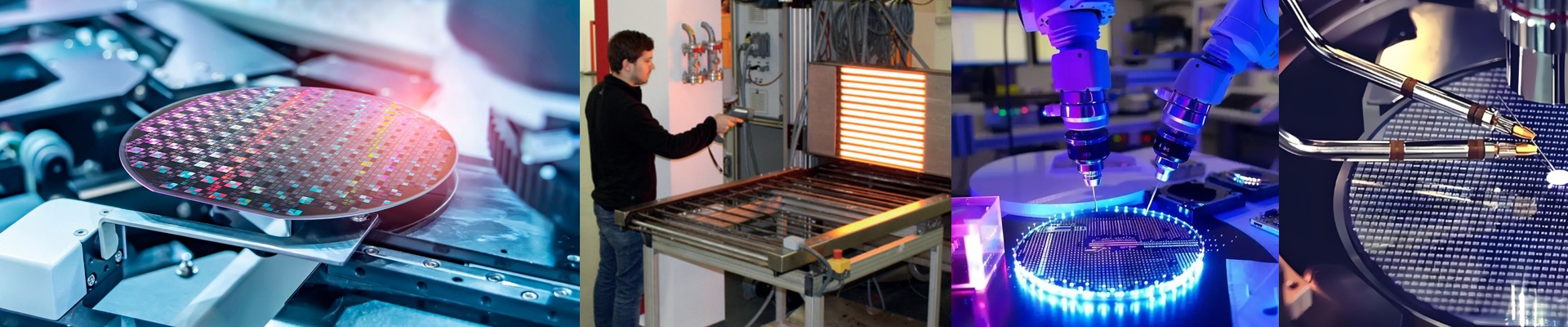
If you’re aiming for lead-free specs, you can’t have emissions. Period. IR curing is a dry process. There are no combustion leftovers or weird chemicals floating around your cleanroom. We use quartz-based emitters, so you don’t have to deal with outgassing. It also saves a ton of space. You can just slide IR banks right into your conveyor line. Your machines get smaller, and your power bill drops because you aren’t fighting to keep a giant oven at a steady temperature.
The reality check
Now, IR isn’t magic. It has its quirks. If your part has a weird shape—like deep holes or different thicknesses—you can run into trouble. The surface might get scorching hot before the core even warms up. If you aren’t careful with your lamp distance and layout, you’ll end up with hot spots. To fix that, we usually go with pulsed IR or modulated power controllers. It keeps the heat steady and prevents the part from stressing out. It takes a bit of tweaking, but once it’s dialed in, it’s a breeze.