
Why Vacuum IR is the Way to Go for Semiconductor Curing
The semiconductor world is finally moving toward “green” and lead-free standards. It’s about time. For too long, we’ve leaned on convection ovens and harsh chemicals that just waste energy and leave gunk on the wafers. If you’re looking for a way out of that mess, vacuum-compatible infrared (IR) heaters are the answer.
How it actually works
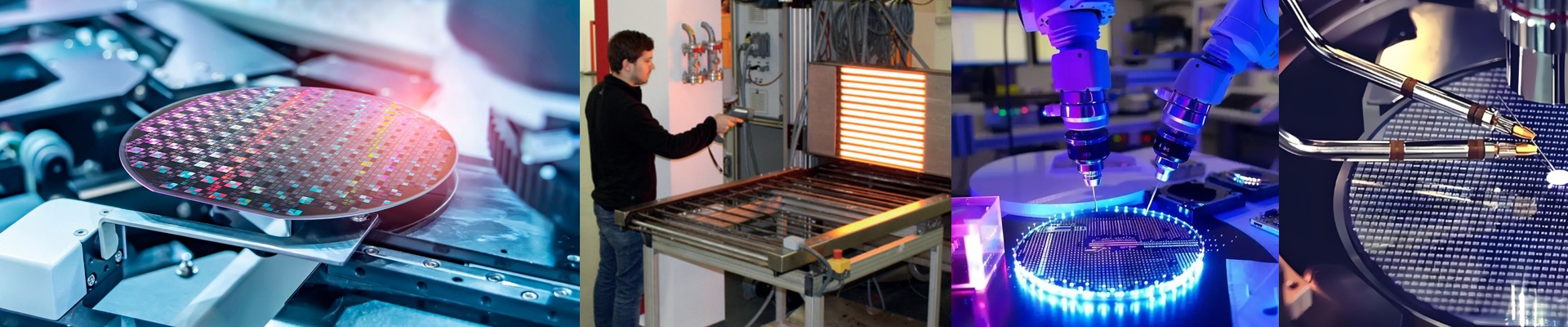
Think about it: in a vacuum, you’ve got no air. No air means no convection. You can’t just “blow hot air” on something when there is no air to blow. That’s where IR comes in. It uses electromagnetic waves to hit the substrate directly. You aren’t wasting time heating up the walls of a massive chamber or thousands of cubic feet of empty space. You’re just heating the target. It’s fast. Really fast. And it’s easily the most efficient way to get the job done.
Cleaning up the process
Lead-free solders and eco-friendly resins are a bit finicky. They need a very specific thermal profile. If you go too hot, you fry the chip. Too cold? The curing fails and you’ve wasted a batch. We use short-wave IR to get the temperature up quickly and precisely. The best part? You can ditch the volatile organic compounds (VOCs) that used to be the “secret sauce” for speeding up drying. By getting rid of the air and the chemicals, you’re basically hitting a zero-emission process. It’s cleaner for everyone.
The “Gotchas” (Engineering Trade-offs)
Now, here is the catch. High-intensity IR heaters put out a massive amount of heat. It’s great for production speed, but it’s brutal on your hardware. I’ve seen plenty of systems crash because the cooling water loop wasn’t built for the lamp’s actual wattage. If you don’t balance that IR output with how your chamber sheds heat, you’re going to deal with outgassing or ruined seals. A few pro tips: use high-temp leads. And for heaven’s sake, make sure your vacuum flange can handle the thermal expansion of the quartz tube. If you don’t, you’ll be chasing leaks every single time the lamps cycle on and off.