
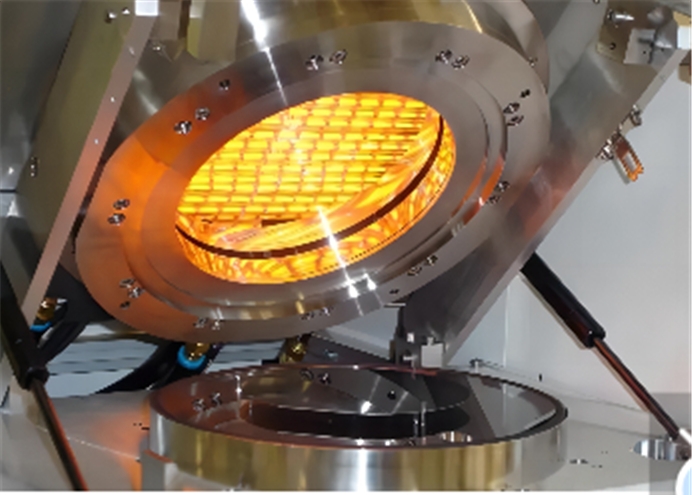
Stop Heating Your Equipment Walls
If you’ve ever worked with semiconductor tool fab, you know the headache of uncontrolled heat. It’s a liability. Most standard heating elements just throw energy in every direction. The problem? When you cram those into a tight chassis, the inner walls just soak up all that waste. You end up with “hot walls” that can burn an operator or, even worse, mess with the thermal stability of your wafer process. It’s frustrating and inefficient.
How we actually fix the physics
We tackle this by pairing short-wave IR lamps with custom-built stainless steel housings. Instead of letting heat bleed into the machine frame, we use reflective shapes to force that IR energy exactly where it needs to go. Think of it like a flashlight beam instead of a lightbulb. The housing acts as a shield. We use a specific grade of stainless steel and polish the inside to a mirror finish. This beams the radiation forward, keeping the outside of the equipment cool while the target zone gets screaming hot.
The grit behind the fabrication
We stick with stainless steel because it can take a beating. Thermal cycling is brutal, and cheap alloys just warp or oxidize. Once they lose that reflectivity, your efficiency tanked. The real secret is in the focal point. If the housing is even a tiny bit off-center, you get these annoying hot spots on the inner wall. That’s why we machine these to incredibly tight tolerances. Now, some people wonder why we don’t use aluminum. Here’s the thing: stainless steel has lower thermal conductivity. That’s actually a win. It stops the housing from becoming a giant heat sink that warms up the rest of your tool.
Out on the shop floor
Once you wire this up, you’ll feel the difference immediately. You get intense heat density right on the workpiece, but the chassis stays safe to touch. Just a heads-up: make sure your airflow is set up to handle that concentrated heat at the target point. If you don’t, you might end up scorching your substrate.